
Dougherty County Arrest Records and Court Charges
Arrest records in Dougherty County usually start with the Dougherty County Sheriff's Office or another arresting agency. The Sheriff's Police-to-Citizen system includes a Recent Arrests catalog and an Inmate catalog for jail custody records. Those records can show the person booked, arrest date, arresting or booking agency, holding facility, primary charge, total bond, court date, release information, and charge rows when the public display is enabled. They are custody and booking records, not final court judgments.
Court charges after arrest become part of a different record stream. Superior Court criminal cases include felony indictments, accusations, motions, plea entries, trial settings, verdicts, sentencing orders, probation terms, and appeals. State Court handles misdemeanors punishable by 12 months or less. Albany Municipal Court handles city traffic, DUI, underage alcohol, marijuana under one ounce, firearms, nuisance, abatement, animal-control, and ordinance matters. The Clerk of Superior Court civil and criminal case search is the main online route for court-filed charges in Superior, State, and Municipal records.
The local distinction matters because a booking entry may list an initial suspected offense, while the filed charge record may identify the formal allegation the court will process. A full criminal case file belongs on the criminal court records side because it includes pleadings, hearings, disposition, sentence, and post-judgment activity. A jail roster entry belongs with inmate records because it describes current or recent custody. A charge lookup sits between those systems and should be checked against both.
The Sheriff's P2C recent arrests source is one of the official public entry points for the arrest side of this workflow.
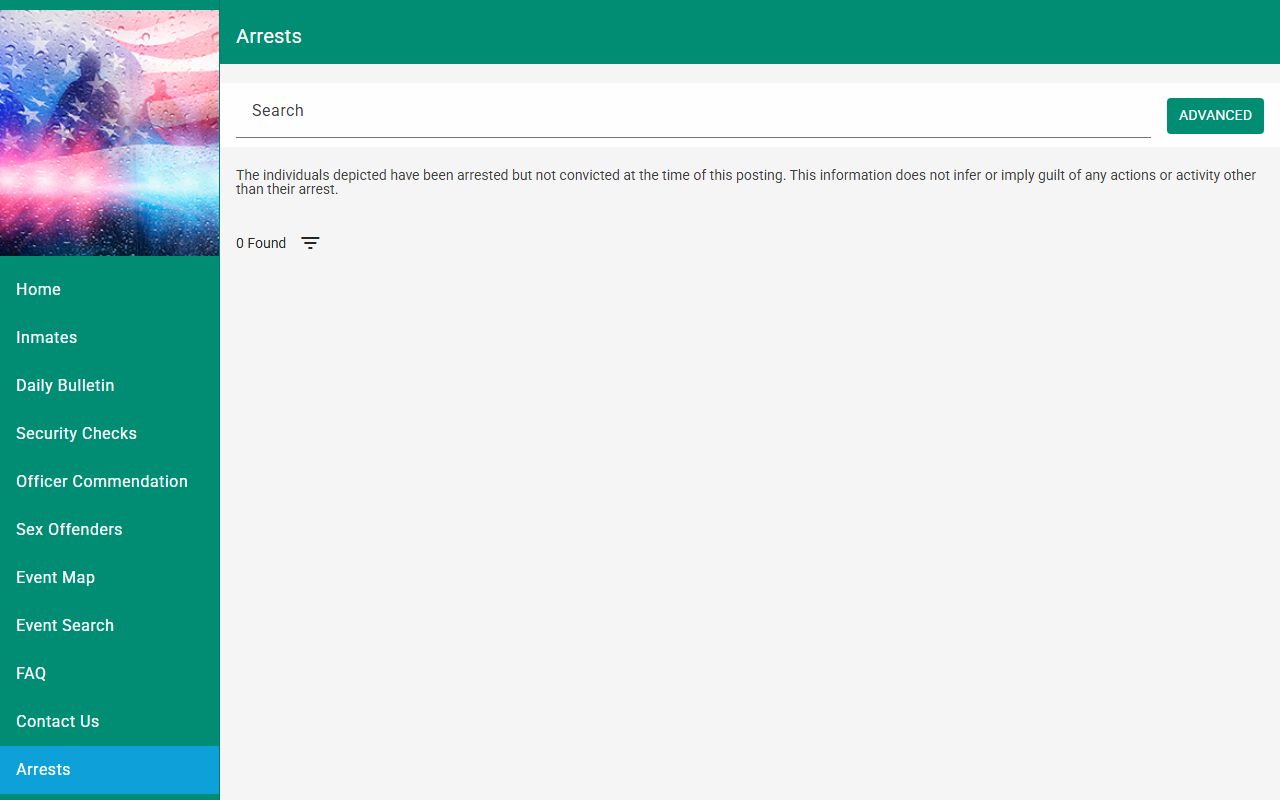
Use the arrest catalog as a starting point, then confirm filed charges and later court action through the Clerk or the court that received the case.
How to Find Dougherty County Arrest Records and Charges
Start with the type of fact being verified. For custody, booking date, holding facility, bond display, release date, or jail status, use the Sheriff's P2C inmate and recent-arrest modules or call the jail. For filed charges, docket number, court date, accusation, indictment, plea, disposition, or sentence, use the Clerk's CM Web Search or contact the Clerk of Superior Court. The Clerk's office is at 225 Pine Avenue, Suite 126, Albany, Georgia 31701, phone 229-431-2198, email dococlerks@dougherty.ga.us, with business hours of 8:30 a.m. to 5:00 p.m. Monday through Friday.
- Open the Clerk's CM Web Search and read the public-records disclaimer.
- Choose Search By Party, Search By Associated Party, or Search By Case Number. For party searches, enter last name followed by first name, avoid suffixes, use at least two letters, and try spelling variations.
- Open the matching case row and review court, case number, filing date, party name, case type, docket entries, hearings, status, and any charge details the system exposes.
- Compare charge rows against the Sheriff's P2C record if the question involves booking date, bond, release, arresting agency, or jail custody.
- If the case is missing, sealed, restricted, older, or not indexed, call or email the Clerk instead of assuming no charge exists.
For sheriff-side records that are not visible online, use the Sheriff's open-records request email at DCJF@dougherty.ga.us. For jail intake questions, use Jail Intake at 229-430-6531. For criminal records questions through the Sheriff's Office, use 229-430-6516. Albany Municipal Court matters may require the Municipal Court channel at 229-431-2865 or the city's JustFOIA process rather than the county case search alone.
How Charges Get Filed After an Arrest
In Dougherty County, the District Attorney prosecutes criminal violations in the Dougherty Judicial Circuit, attends pretrial hearings, grand jury sessions, and trials in Superior, State, and Juvenile Courts, and prepares indictments and accusations. District Attorney Gregory W. Edwards' office is in the Judicial Building at 225 Pine Avenue, Suite 231, Albany, with phone 229-431-3233. A felony arrest may move through Magistrate Court warrant or committal functions, then into Superior Court by indictment or accusation. Misdemeanor and city cases may route through State Court or Albany Municipal Court depending on the offense and issuing agency.
| Document or Event | Who Creates It | What It Means Locally |
|---|---|---|
| Arrest or booking entry | Arresting agency or jail staff | Shows custody information, suspected offense, bond fields, court date, and release fields when P2C displays them. |
| Warrant | Often Magistrate Court or another court | Magistrate Court has authority to issue warrants for all criminal offenses and handles committal hearings. |
| Accusation | Prosecutor | A prosecutor-filed charging document that identifies the formal charge before court action. |
| Indictment | Grand jury | A felony charging document prepared through the District Attorney and returned by a grand jury. |
| Citation | Law enforcement or code enforcement | Common for Municipal Court traffic, ordinance, DUI, nuisance, animal-control, and similar city matters. |
The charge record is narrower than the complete criminal file. It may identify charge name, description, docket number, warrant number, bond type, bond status, bond amount, court date, and filing or issuing court. The criminal case file adds the rest of the prosecution history, including motions, pleas, verdict, sentencing, probation, and appeal activity.
Charge Status and What It Means
A charge status can change as prosecutors, defense counsel, the court, and the facts of the case move through hearings. A booking record might show a primary charge before prosecutors finalize the filed allegation. A court case may later show an amended charge, a dismissed charge, a plea to a reduced offense, or a sentence after conviction. Public search results should be read by charge row, not only by the first offense listed.
| Status | What It Means |
|---|---|
| Pending | The charge is still active and has not reached final disposition. |
| Amended or Reduced | The filed allegation changed, often by prosecutor action, plea negotiation, or court order. |
| Dismissed | The charge was ended without a conviction on that charge. The case may still include other counts. |
| Nolle Prosequi | The prosecutor chose not to proceed on the charge, subject to Georgia procedure and court records. |
| Disposed or Sentenced | The charge has a court outcome, such as plea, verdict, sentence, probation, or other final action. |
Charges vs. Convictions
A charge is an allegation filed after an arrest, citation, warrant, accusation, or indictment. A conviction is a final court outcome after a guilty plea, nolo plea where accepted, or verdict. Arrest records and charge records should not be treated as proof of guilt. Dougherty County court records may show both the original charge and the final disposition, so the final result must be checked before describing the case outcome.
| Charge | Conviction | |
|---|---|---|
| Stage | Allegation after arrest, citation, warrant, accusation, or indictment. | Final result after plea, trial, or other adjudication. |
| Where to verify | P2C charge row, warrant record, court case search, or Clerk contact. | Court docket, disposition, sentencing order, probation term, or certified court record. |
| Effect | May be pending, amended, reduced, dismissed, or not prosecuted. | May carry sentence, probation, fines, reporting to other agencies, or appeal rights. |
Sealed and Restricted Records
Georgia commonly uses the term record restriction for many criminal history records rather than ordinary expungement language. O.C.G.A. 35-3-37 is the state record-restriction authority identified through the Georgia Bureau of Investigation. For arrests after July 1, 2013, the GBI source says there is no application process with GBI and the person should contact the prosecutor. For arrests before July 1, 2013, the request starts with the arresting agency. If the record is in a court file, a court petition or order may also be needed.
| Restricted | Sealed | |
|---|---|---|
| Visibility | Limited for non-criminal-justice purposes when approved under Georgia rules. | Limited by court order or statute, depending on the case type. |
| Law enforcement and courts | May still be available to authorized criminal-justice users. | May remain available to the court or authorized agencies. |
| Dougherty starting point | Prosecutor for post-July 1, 2013 arrests; arresting agency for older arrests. | The court with the file, often through the Clerk or the issuing court. |
Juvenile, adoption, mental-health, active investigative, sealed, and protected personal data are not ordinary public lookup records. Public-facing systems may also redact Social Security numbers, financial account numbers, victim identifiers, minor names, dates of birth, addresses, or other protected information.
Charge Codes and Severity Levels
Charge rows can appear with a name, description, status, docket number, bond type, bond status, and bond amount. The research inventory for P2C also notes demographics, arrest date, court date, total bond amount, booking agency, holding facility, arresting agency, primary charge, and primary charge description. One arrest can generate several separate charges, and one charge can have its own bond and status. Superior Court is the local general-jurisdiction court for felony matters, while State Court handles misdemeanors punishable by 12 months or less. Municipal Court handles many city-level misdemeanors, traffic offenses, DUI, and ordinance charges.
The Georgia Bureau of Investigation registry source is a separate statewide public-safety registry, not a general arrest or charge search.
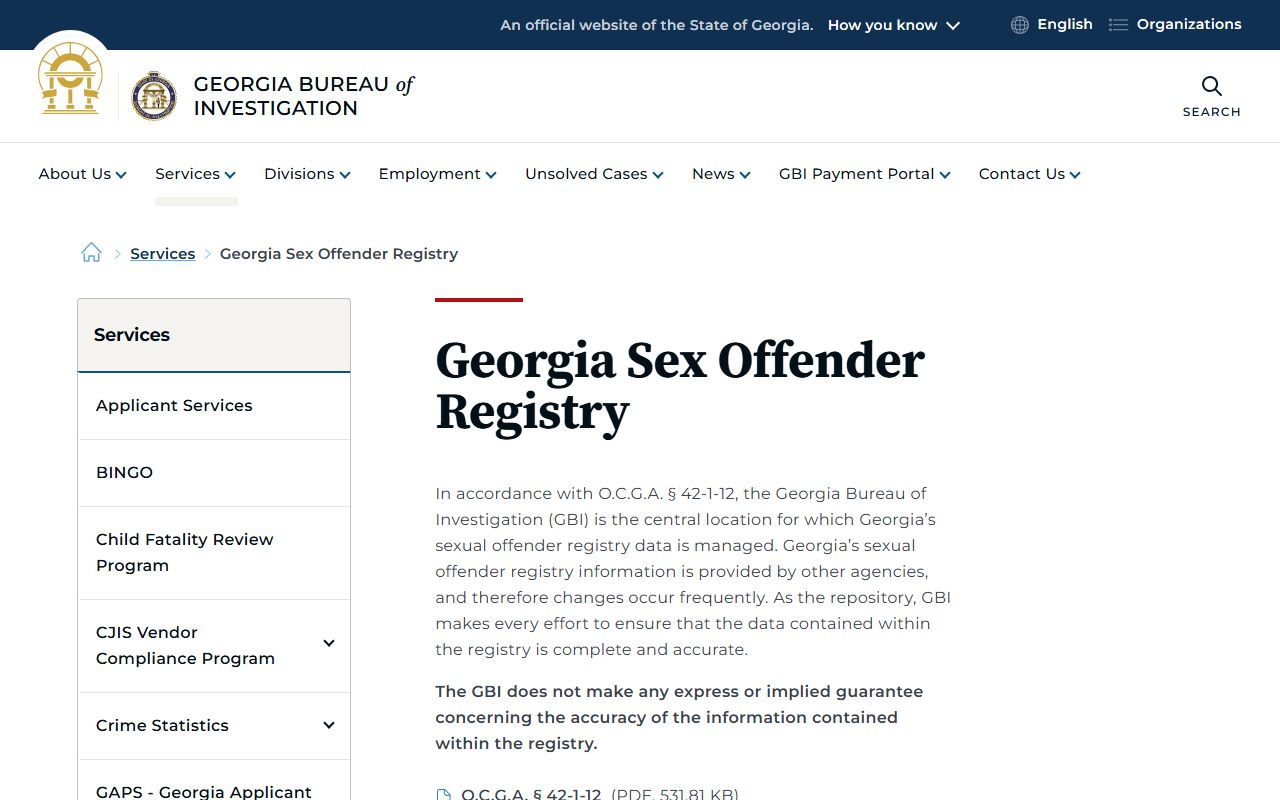
Registry status should not be substituted for a Dougherty County charge record, because the court case, charge status, and conviction history must come from the court or the proper state criminal-history channel.
Statewide Charge and Criminal History Lookups
Statewide criminal history and restriction questions are separate from a county court case search. The GBI record restriction page explains Georgia criminal history record restrictions, while Georgia Open Records Act sources govern general public-record access. State-level records may show criminal history information that is not identical to the local court docket, while the local court docket may show filings and hearings that are not summarized in a statewide result.
For Dougherty County court documents, start with the Clerk of Superior Court because the Clerk manages Superior, State, and Municipal records. For Sheriff arrest, jail, warrant, and booking records, start with the Sheriff's Office and P2C. For city citation or municipal charge questions, use Albany Municipal Court at 229-431-2865, the city public request path, or the official payment portal where the citation is payable.
Background Check Considerations
A casual lookup is not the same as a regulated background check. A Dougherty County arrest record may be incomplete, later restricted, missing a final outcome, or split between P2C and a court docket. A court charge can also be pending, reduced, dismissed, or resolved by a sentence that appears on a later docket entry. Employment, housing, credit, insurance, and other regulated decisions require lawful procedures and should not rely on a single public search result.
Important: Public lookup results are not consumer reports and should be verified with the originating government office.
Restricted Charge Records in Dougherty County
Access depends on the agency and record type. Court case records start with the Clerk at 229-431-2198 or dococlerks@dougherty.ga.us. Sheriff open-records requests use DCJF@dougherty.ga.us. Probate and marriage records start with Probate Court, while juvenile matters are treated separately under Georgia juvenile access rules. Public access does not override sealed cases, juvenile limits, record restriction, adoption confidentiality, mental-health confidentiality, active-investigation exemptions, or mandatory redaction of protected identifiers.