
Dougherty County Superior Court
The state court structure map resolves the trial-court page for this project as Superior Court, not District Court. Georgia's trial-level system includes Superior, State-wide Business, State, Juvenile, Probate, Magistrate, and Municipal courts. In Dougherty County, Superior Court sits in the Dougherty Judicial Circuit and handles the broad case types that Georgia reserves for general-jurisdiction trial courts. The county Superior Court page identifies felony cases, divorce, equity, land-title matters, judgments, sentencing, trial settings, and annual calendars as part of the court's work.
Superior Court records should not be confused with federal district court records. Dougherty County is in the Albany Division of the U.S. District Court for the Middle District of Georgia, but those federal files are not county court records. County Superior Court records flow through the Dougherty Clerk of Superior Court and the local Tyler CM Web Search system. Federal civil, criminal, bankruptcy, and appeal records use federal clerks, PACER, CourtListener, and the Middle District offices.
The Superior Court's local role is large because felony prosecutions, divorce cases, title-to-land disputes, and equity claims can affect later records across other offices. A Magistrate warrant or committal can be the start of a felony path. A District Attorney indictment can turn the matter into a Superior Court case. A final sentence, divorce decree, or civil judgment then becomes a court record kept through the clerk.
Dougherty Superior Court Judges
Research found four current Superior Court judge room listings in the Judicial Building and a broader judge list naming the local bench. Because Dougherty County does not use numbered district courts, the required trial-court table is adapted to the researched Superior Court judge and office structure rather than inventing court numbers.
| Court / Judge | Type | Address / Room | Phone |
|---|---|---|---|
| Chief Judge Denise Marshall | Superior Court | 225 Pine Avenue, Room 216, Albany, GA 31701 | 229-431-3242 |
| Judge Victoria S. Darrisaw | Superior Court | 225 Pine Avenue, Room 222, Albany, GA 31701 | 229-434-2683 |
| Judge Joseph W. Dent | Superior Court | 225 Pine Avenue, Room 205, Albany, GA 31701 | 229-302-3667 |
| Judge Victoria M. Johnson | Superior Court | 225 Pine Avenue, Room 212, Albany, GA 31701 | 229-302-3752 |
| Clerk of Superior Court | Records custodian | 225 Pine Avenue, Suite 126, Albany, GA 31701 | 229-431-2198 |
Dougherty Superior Court Jurisdiction
Superior Court is the highest local trial court in Dougherty County. The research identifies felony criminal cases, title-to-land matters, divorce, equity, jury and bench trials, judgments, sentencing, and an annual caseload of about 4,950 cases. Superior Court also oversees other court functions that support criminal proceedings, including indigent-counsel safeguards, the law library, jury commissioners, and juror necessities.
The court's work overlaps with other local offices but does not replace them. State Court handles misdemeanors punishable by 12 months or less and civil cases concurrent with Superior Court except divorce, title to land, and equity. Magistrate Court issues warrants, holds committal hearings, handles bad checks, zoning citations, good behavior bonds, civil claims up to $15,000, garnishments, subpoenas, and weddings. Probate, Juvenile, and Municipal courts have their own subject areas and access rules.
| Record Path | Superior Court | Lower or Separate Court |
|---|---|---|
| Felony criminal cases | Final felony case file, indictment, plea, trial, sentence | Magistrate may handle warrant and committal stages. |
| Misdemeanors | Possible related appeals or connected felony matters | State Court or Albany Municipal Court usually handles the main case. |
| Divorce | Reserved to Superior Court | Probate Court handles marriage licenses, not divorce decrees. |
| Small civil claims | Higher civil matters and reserved equity/land issues | Magistrate handles civil claims up to $15,000. |
| Juvenile matters | Limited connected or transferred matters | Juvenile Court has restricted access for youth records. |
Dougherty Superior Court Case Flow
Criminal case flow in Dougherty County depends on the charge level. An arrest may first create a Sheriff booking record, a P2C recent arrest entry, a jail custody record, or a Magistrate Court warrant/committal event. The District Attorney then prosecutes criminal violations in the Dougherty Judicial Circuit, attends pretrial hearings and grand jury sessions, and prepares indictments and accusations. Felony cases move into Superior Court for arraignment, motions, plea or trial, disposition, sentencing, and appeal records.
Criminal flow: Arrest › Magistrate warrant or first appearance › District Attorney accusation or indictment › Superior Court arraignment › pretrial motions › plea or trial › disposition › sentencing › appeal.
Civil and family flow: complaint or petition filed › service › answer › motions › hearings or mediation › trial or settlement › judgment, decree, or order › appeal when allowed.
For record searches, that flow means a single person's name can appear in more than one system. A jail roster entry is not a final court case. A charge is not a conviction. A Superior Court disposition or sentence carries more weight than an early arrest or warrant record.
Search Superior Court Records
Dougherty County Superior Court records are searched through the Dougherty CM Web Search system when they are public and indexed. The portal offers Search By Party, Search By Associated Party, and Search By Case Number paths. The party search instruction uses last name followed by first name, with no suffix, and a minimum of two letters. The portal also tells users to search all spelling variations of proper names to maximize results.
- Start at the Clerk of Court page or open the CM Web Search entry screen.
- Accept the public-records disclaimer.
- Choose party, associated-party, or case-number search.
- Enter the name or exact case number from a court notice, docket, or clerk letter.
- Review case rows for court, case type, filing date, docket entries, and status.
- Contact the clerk when the case is missing, restricted, sealed, old, or needed as a certified copy.
Dougherty Superior Court Calendars
The Superior Court page links annual calendars, including 2026 and 2025 calendar PDFs, and the research also captured a specific Criminal Trial Calendars page. Calendar PDFs are not the same as full case records. They help confirm court dates, trial weeks, and scheduling patterns, while the case file in CM Web Search or at the clerk's office is where filings, orders, disposition, and sentence records are found.
The county also has a jury trial plan that names local trial planning practices. The plan is useful for understanding jury operations, but it does not replace a docket search. Users with an upcoming court date should check the court notice and contact the court coordinator or clerk if online calendar information conflicts with a direct notice.
Note: Online calendars can change faster than static PDFs, so confirm hearing dates with the court before travel.
Dougherty Lower Courts
Lower courts decide where a record begins. State Court of Dougherty County is in Suite 308 and handles misdemeanors punishable by 12 months or less, plus civil matters concurrent with Superior Court except divorce, land title, and equity. Magistrate Court has a key role in warrants, committals, good behavior bonds, garnishments, subpoenas, weddings, and civil claims up to $15,000. Probate Court handles estate, marriage, guardianship, weapons carry, and vital-record functions. Juvenile Court handles delinquency, dependency, CHINS, juvenile traffic, and termination of parental rights, with restricted public access for many records.
Albany Municipal Court is separate from the county Superior Court. It handles city ordinance violations, traffic, DUI, underage alcohol, marijuana under one ounce, firearms, nuisance and abatement, and animal control cases. Municipal in-custody arraignments occur at the jail, while bench trials and other arraignments are heard at the Albany Law Enforcement Center. City citation records may use Albany Municipal Court, JustFOIA, and JusticeONE rather than the Superior Court path.
Federal Courts Near Dougherty
The U.S. District Court for the Middle District of Georgia is a federal court system that serves Dougherty County through its Albany Division.
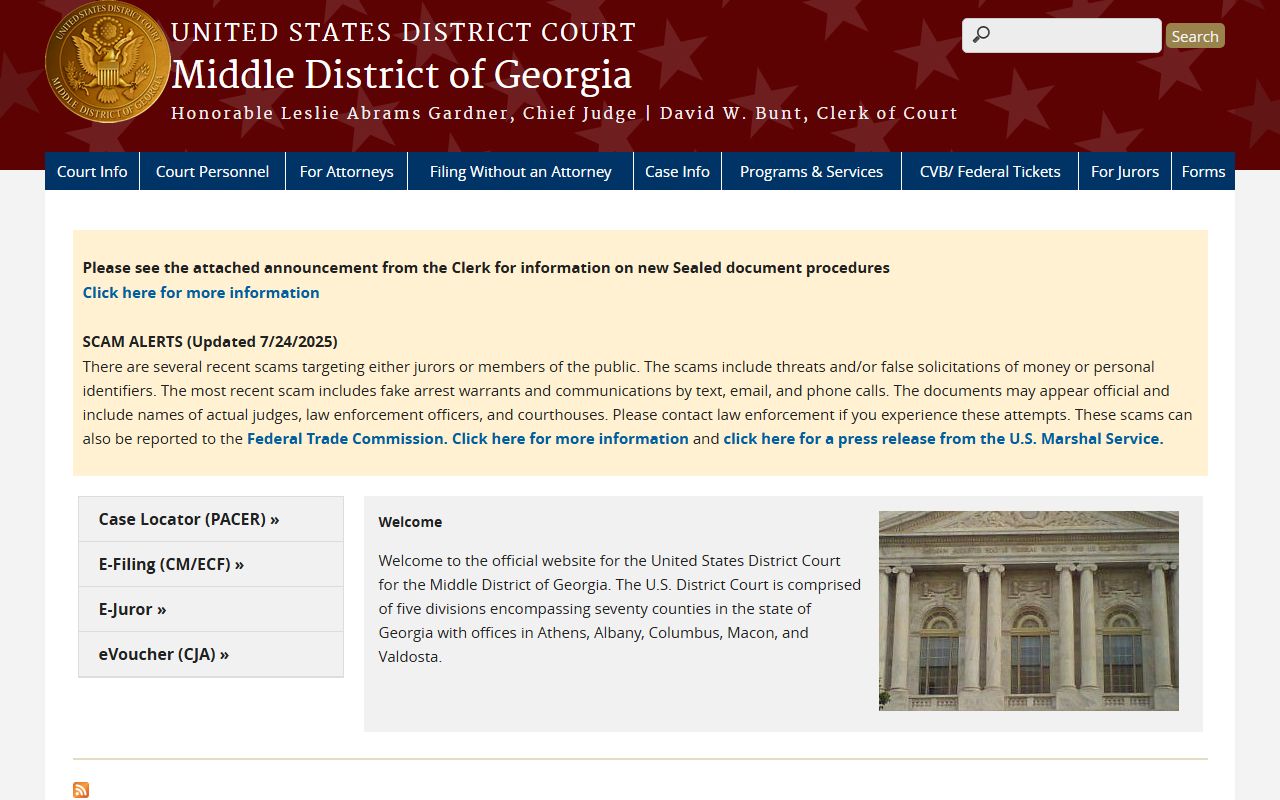
Federal district records are not searched through the Dougherty County Superior Court clerk, even when the federal courthouse is in Albany.
The Albany federal courthouse page lists the federal location at the C.B. King U.S. Courthouse.
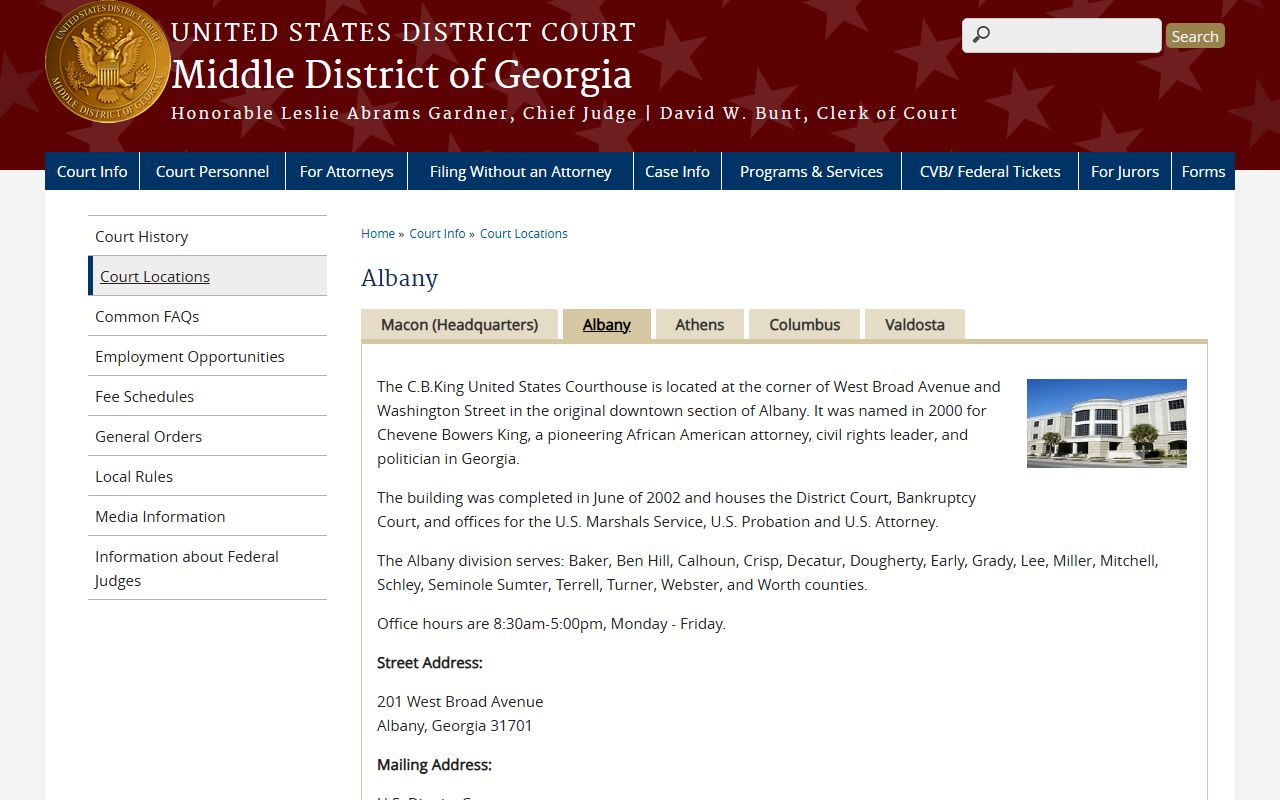
County Superior Court records stay with the local clerk, while federal records use federal clerk offices and PACER.
The PACER system is the main federal electronic case-access system.
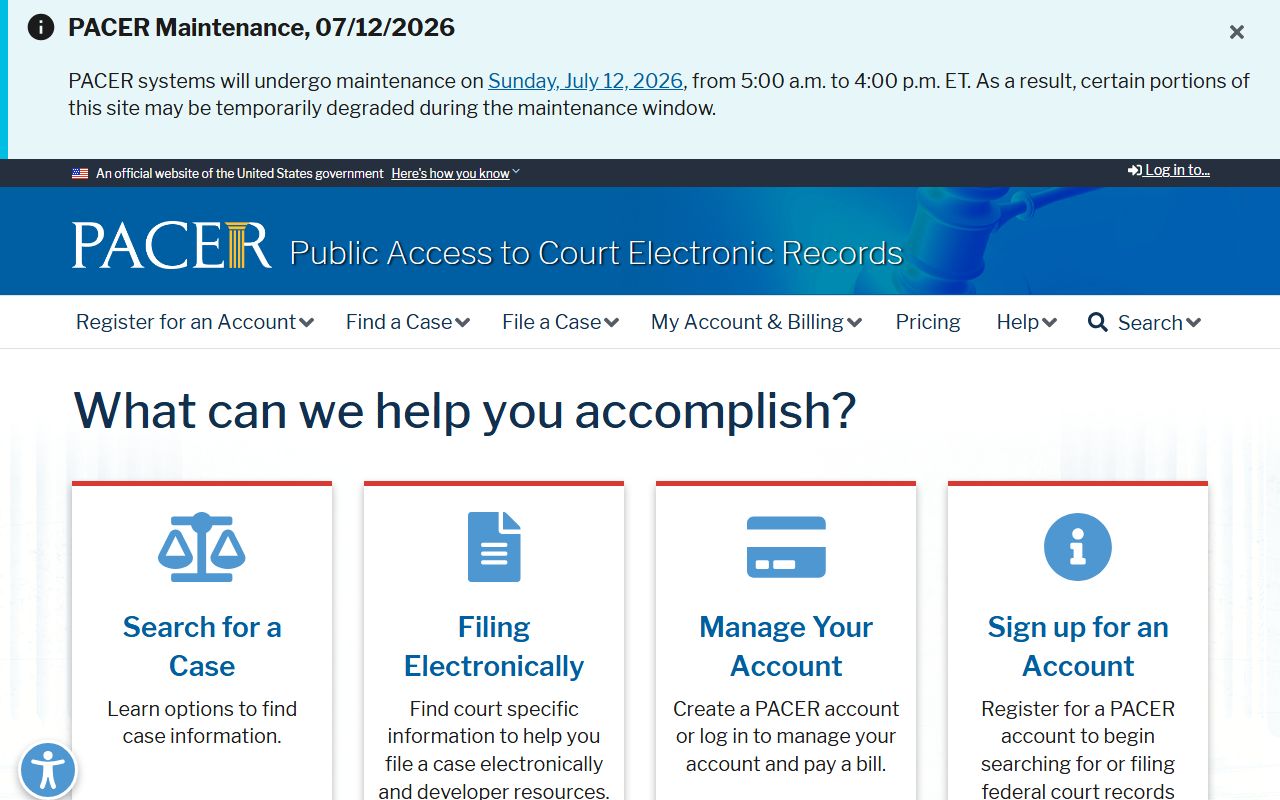
PACER access is useful only when the case is federal, not when a Dougherty County Superior Court case is needed.
The U.S. Bankruptcy Court for the Middle District of Georgia keeps bankruptcy records separately from county civil records.
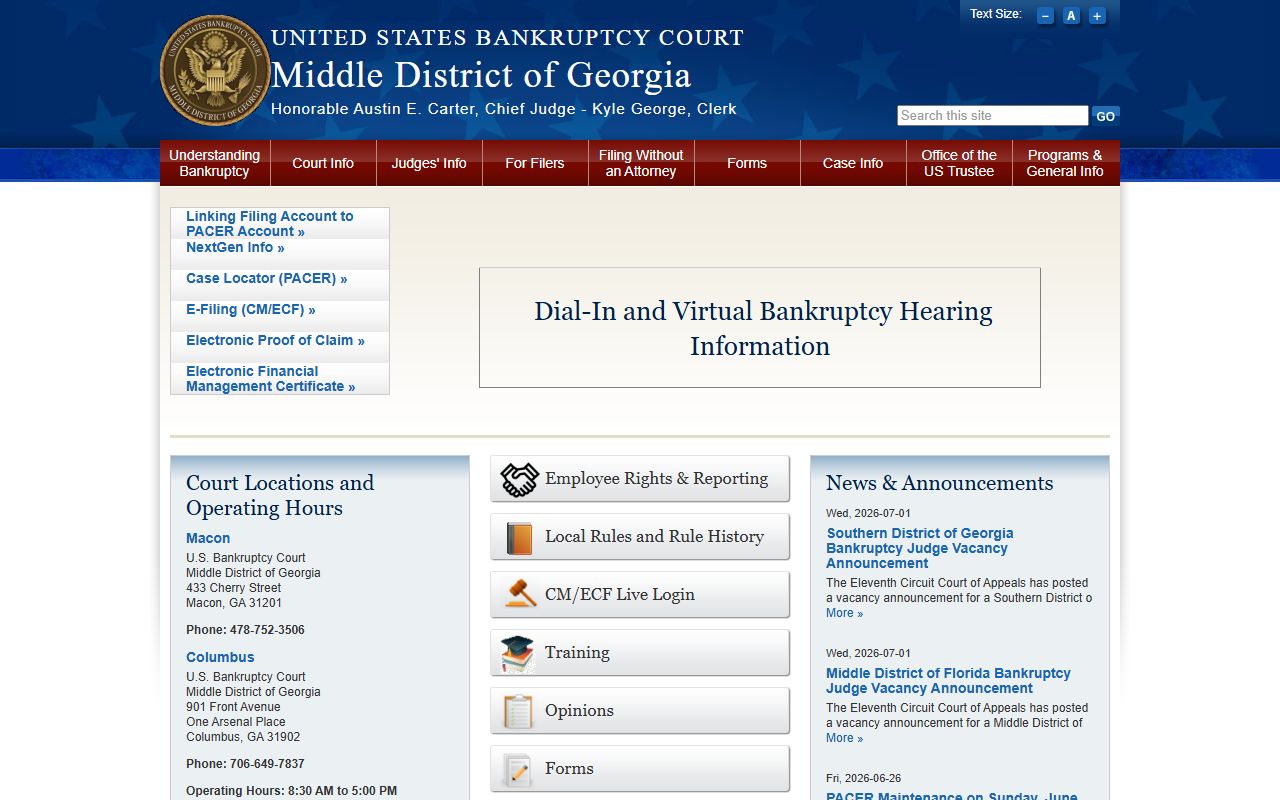
Bankruptcy matters may involve Dougherty residents, but they are federal records rather than Superior Court records.
The bankruptcy court's PACER information page explains federal electronic file access.
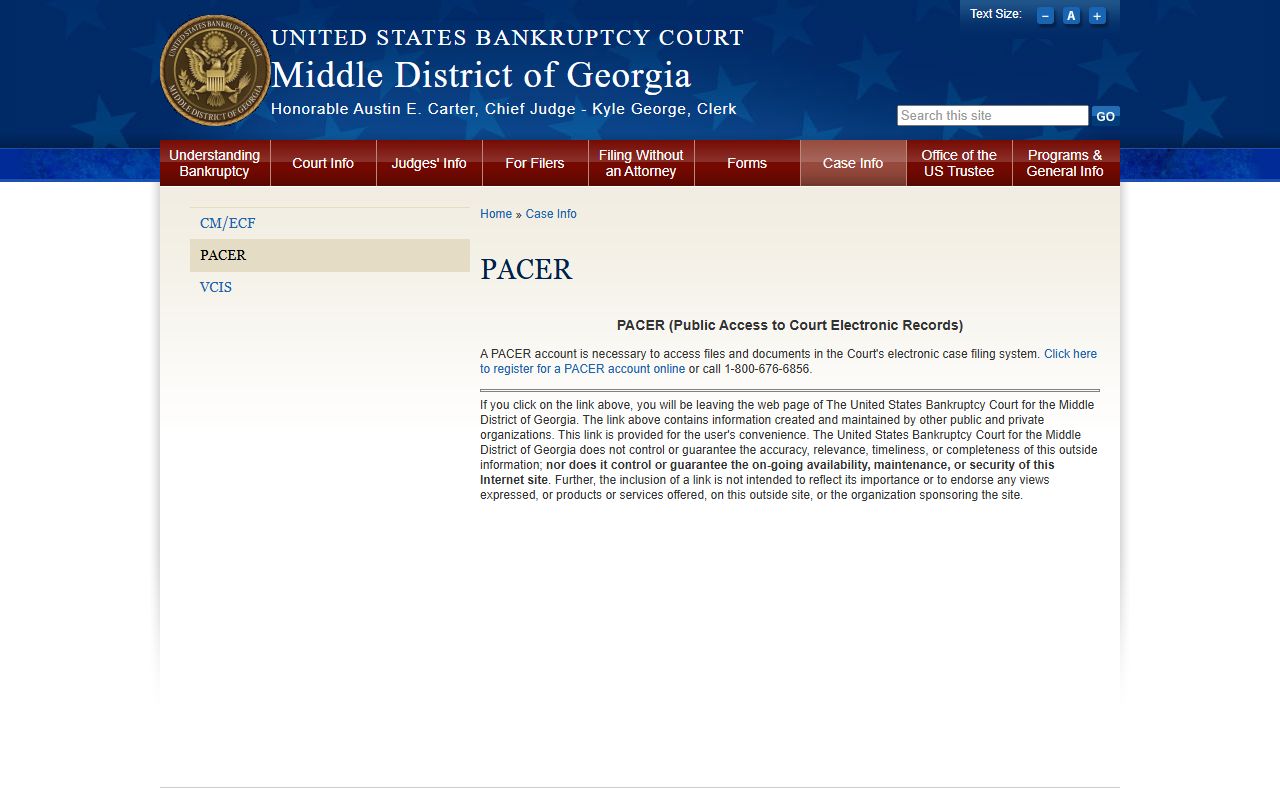
That split helps prevent searches in the wrong system when a case looks local but was filed in federal court.
CourtListener can provide free federal docket or opinion access where available.
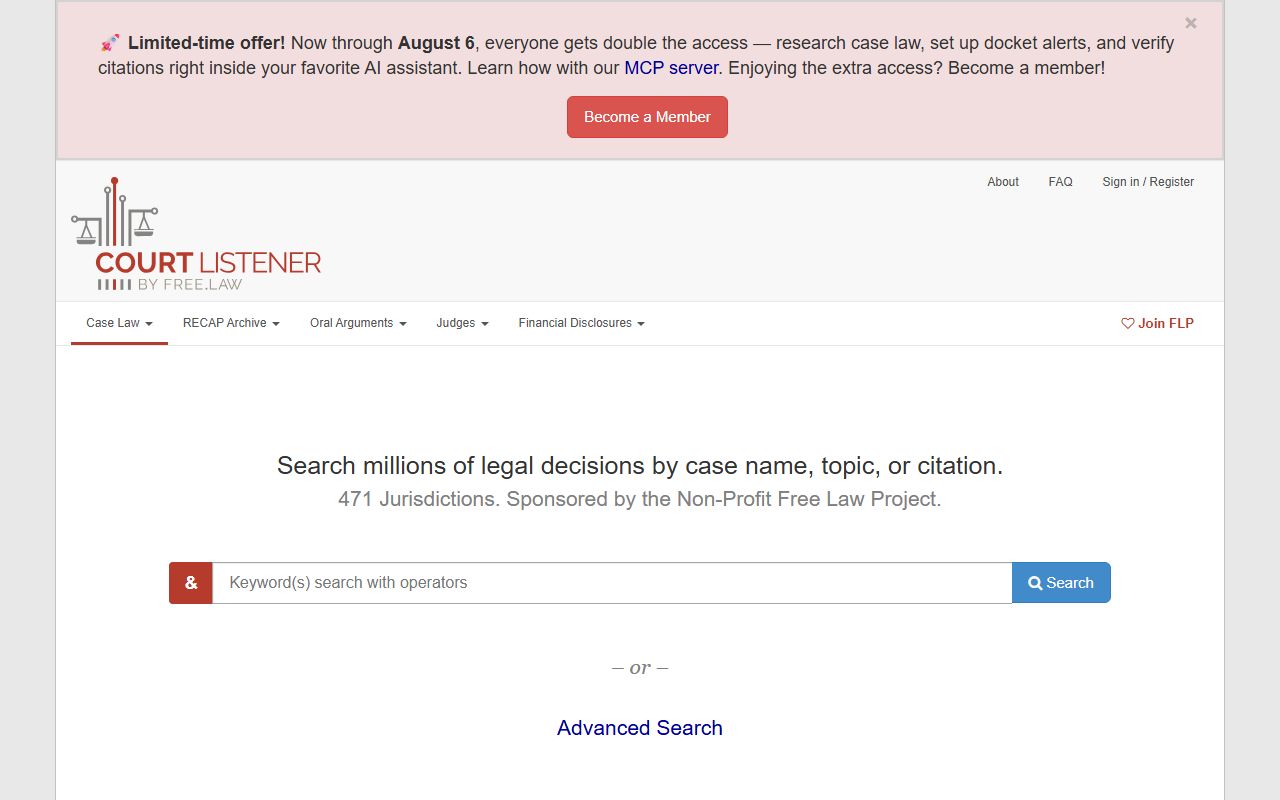
CourtListener is a federal research aid, not a substitute for the Dougherty Clerk of Superior Court's local records.
Dougherty Trial Court History
Dougherty County was created on December 15, 1853 from Baker County, with portions of Worth County added in 1854 and 1856. Albany is the county seat and remains the center of local court access. The State Court history is unusually detailed: the City Court of Albany became the State Court of Dougherty County by 1974 legislation, and later changes expanded civil jurisdiction and helped shape the Small Claims Court predecessor to the current Magistrate Court.
The history matters for record searches because older records may reflect prior court names, older jurisdiction limits, or calendar practices that changed before modern Tyler access. If an old misdemeanor, civil claim, or State Court matter does not appear online, the clerk or court office is the better fallback than repeating the same search.